The rapid evolution of aesthetic formulations has created growing demand for bioactive ingredients that combine scientific credibility, formulation flexibility, and strong market appeal. Among the ingredients attracting significant attention from product developers, medical aesthetic brands, and skincare manufacturers, PDRN powder has emerged as one of the most discussed innovations in recent years.
Derived from highly purified DNA fragments, PDRN powder is increasingly incorporated into advanced cosmetic formulations, mesotherapy products, skin boosters, and professional skincare systems. As the aesthetic industry continues to move toward ingredient-driven product development, formulators are actively seeking functional raw materials that align with consumer demand for sophisticated and science-backed solutions.
Unlike trend-driven ingredients that appear and disappear within a few product cycles, salmon DNA powder has attracted sustained interest due to its unique molecular characteristics and its compatibility with modern aesthetic formulations. Today, many brands developing next-generation serums, ampoules, professional treatments, and premium skincare products are exploring the use of polynucleotide raw materials as part of their formulation strategy.
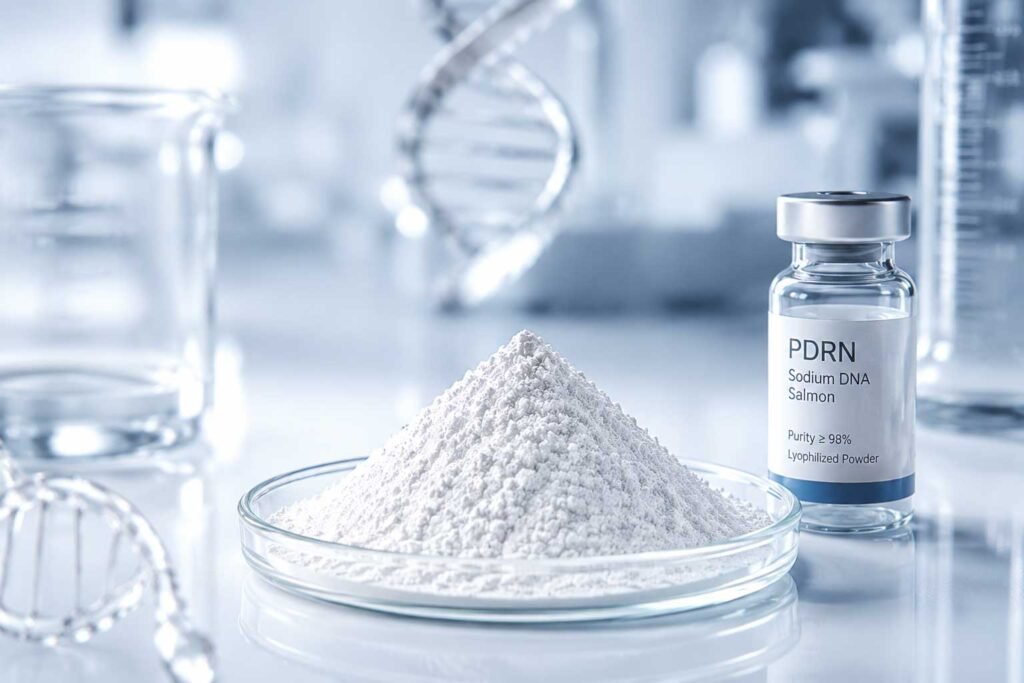
From a manufacturing perspective, not all PDRN ingredients are created equal. Raw material sourcing, purification technology, molecular weight control, and quality assurance standards can significantly influence product consistency and formulation performance. As a result, selecting a reliable PDRN supplier has become just as important as selecting the ingredient itself.
This article explores what PDRN powder is, how it is produced, why it has become widely used in aesthetic formulations, and what buyers should understand before sourcing injectable grade PDRN or cosmetic-grade materials for commercial applications.
What Is PDRN Powder?
PDRN powder refers to purified polydeoxyribonucleotide (PDRN), a DNA-derived ingredient obtained through controlled extraction and purification processes. The material consists of carefully processed nucleotide fragments that originate from salmon-derived DNA sources and are subsequently refined to achieve high levels of purity and consistency.
In the aesthetic and cosmetic industries, polydeoxyribonucleotide is valued not simply because of its origin, but because of its molecular profile. Its structure allows formulators to incorporate it into a wide range of advanced skincare and aesthetic products, including serums, skin boosters, mesotherapy formulations, and professional-use treatments.
The growing interest in salmon DNA ingredients reflects a broader trend within the beauty and aesthetic sectors. Formulators are increasingly looking beyond conventional actives and exploring biomimetic ingredients that can help differentiate premium product lines. In this context, PDRN powder has gained attention as a next-generation formulation ingredient rather than a traditional cosmetic additive.
From a production standpoint, the quality of a PDRN raw material depends heavily on manufacturing expertise. The extraction process must be carefully controlled to ensure the resulting material meets strict standards for purity, stability, and consistency. This is particularly important for companies developing professional aesthetic products where ingredient specifications play a critical role in product development.
The market generally distinguishes between cosmetic grade PDRN and injectable grade PDRN, although both originate from the same fundamental source material. The difference lies primarily in manufacturing controls, purity standards, documentation requirements, and intended applications.
For product developers and procurement teams, understanding the source and manufacturing process behind a PDRN ingredient is essential. Choosing a qualified PDRN manufacturer can help ensure batch-to-batch consistency, reliable documentation, and long-term supply stability—factors that are increasingly important as the global market for polynucleotide-based products continues to expand.
As more aesthetic brands enter the premium skincare and professional treatment sectors, demand for high-quality PDRN powder is expected to grow, making supplier qualification a key part of the sourcing process.
Why Is PDRN Used in Aesthetic Formulations?
The popularity of PDRN aesthetic formulations is closely linked to changing market expectations. Today’s consumers are increasingly interested in sophisticated skincare products supported by ingredient transparency and scientific innovation. At the same time, brands are looking for distinctive formulation technologies that can help differentiate their products in an increasingly competitive market.
One reason many developers incorporate PDRN for skin booster formulations is its compatibility with modern aesthetic product concepts. The ingredient is frequently positioned alongside other premium actives used in advanced skincare systems, making it attractive for brands targeting high-end market segments.
The rise of professional aesthetic treatments has also contributed to growing interest in PDRN for mesotherapy applications. Around the world, aesthetic clinics and medical beauty providers continue to expand their treatment portfolios, creating demand for ingredients commonly associated with next-generation formulation technologies.
Beyond professional applications, polynucleotide skincare ingredients are increasingly appearing in topical products designed for premium skincare routines. Product developers are incorporating PDRN into formulations such as:
- Intensive treatment serums
- Concentrated ampoules
- Professional facial systems
- Skin booster solutions
- Advanced moisturizing products
This broad formulation flexibility is one of the reasons why PDRN for skincare brands has become a frequently discussed topic within the industry.
Another important factor is market positioning. Brands are no longer competing solely on packaging or marketing claims. Instead, ingredient storytelling has become a major purchasing driver. Consumers increasingly want to know what ingredients are inside a product, where they come from, and why they were selected.
As a result, ingredients such as PDRN powder provide formulators with an opportunity to build stronger technical narratives around their products. The ingredient’s association with advanced biotechnology, DNA-derived materials, and modern aesthetic innovation creates a compelling story that resonates with both professional buyers and end consumers.
For companies sourcing raw materials, working with an experienced PDRN ingredient supplier is essential to ensuring formulation consistency and long-term product quality. Reliable suppliers not only provide raw material specifications but also support brands with technical documentation, quality data, and formulation guidance.
As the global aesthetic market continues to evolve, PDRN aesthetic formulations are expected to remain a growing category, particularly among brands focused on premium positioning and science-driven product development.
How Is PDRN Powder Manufactured from Salmon DNA?
The manufacturing process behind PDRN powder is one of the most important factors influencing product quality. While the term “salmon DNA” is widely used within the industry, producing high-purity pharmaceutical grade PDRN powder involves a sophisticated series of extraction, purification, and quality control procedures.
The process begins with carefully selected salmon-derived raw materials sourced through regulated supply chains. Quality-oriented manufacturers place significant emphasis on traceability, ensuring that incoming materials meet strict sourcing standards before production begins.
Once the source material is received, a controlled extraction process is used to isolate DNA components. During this stage, unwanted proteins, cellular residues, and impurities are removed through a combination of physical and biochemical purification techniques.
The resulting material then undergoes multiple refinement steps designed to produce highly purified salmon DNA powder suitable for advanced aesthetic applications. Depending on the intended use, manufacturers may further optimize the material to achieve specific molecular weight ranges and formulation characteristics.
For companies seeking high purity PDRN, purification technology is often one of the most important supplier evaluation criteria. Small differences in manufacturing processes can significantly affect final product quality, making production expertise a major competitive advantage.
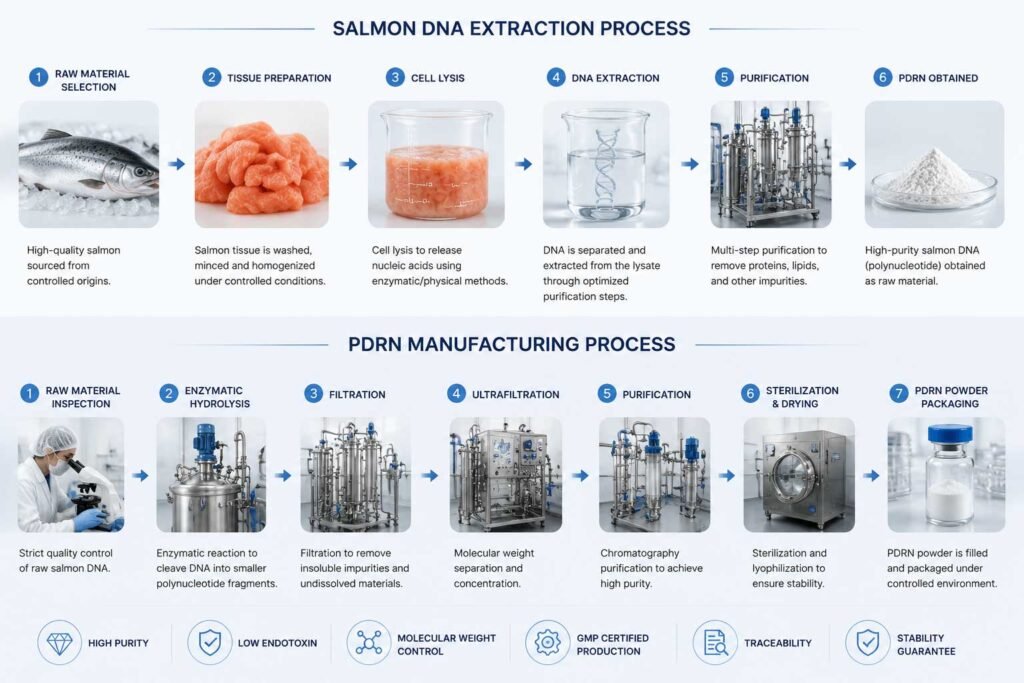
Leading manufacturers also implement rigorous quality assurance programs throughout production. Typical quality control measures may include:
- Purity analysis
- Molecular weight verification
- Microbiological testing
- Stability assessment
- Batch consistency evaluation
For injectable grade PDRN suppliers, additional controls may be required depending on market requirements and product specifications. These controls help ensure the material meets the standards expected by professional buyers operating within highly regulated industries.
Modern GMP PDRN manufacturers also invest heavily in production environments designed to support contamination control and process consistency. Dedicated manufacturing facilities, validated production procedures, and comprehensive documentation systems all contribute to the overall reliability of the finished material.
For procurement teams evaluating a potential PDRN manufacturer, understanding the manufacturing process can provide valuable insight into product quality and supplier capabilities. Factors such as raw material traceability, purification technology, quality systems, and technical support often distinguish premium suppliers from commodity ingredient providers.
As global demand for injectable grade PDRN and cosmetic-grade materials continues to increase, manufacturing excellence will remain one of the key factors influencing supplier selection and long-term business partnerships.
Injectable Grade vs Cosmetic Grade PDRN Powder
Not all PDRN powder is created equal. Manufacturers typically differentiate between injectable grade PDRN and cosmetic grade PDRN, based on purity standards, molecular weight ranges, sterility, and intended applications. Understanding these distinctions is essential for formulation teams, skincare brands, and professional aesthetic providers who want to source raw materials that meet their product specifications.
Injectable grade PDRN is designed for high-precision applications where sterility, endotoxin control, and molecular weight consistency are critical. It is commonly used in professional mesotherapy solutions, skin boosters, and specialized dermal formulations. The material undergoes rigorous purification, often including sterile filtration and endotoxin testing, to meet regulatory expectations for injectable products. Formulators sourcing injectable grade PDRN look for suppliers with robust quality control, batch consistency, and full documentation, including COA, MSDS, and TDS.
Cosmetic grade PDRN, on the other hand, is optimized for topical formulations such as serums, creams, and masks. While it shares the same molecular origin as injectable materials, cosmetic-grade powders may allow for slightly broader molecular weight ranges and different stability considerations. Brands developing skincare products often prefer cosmetic grade PDRN for its formulation flexibility and compatibility with other active ingredients.
For buyers, selecting the appropriate grade is not merely a technical decision—it also influences supply chain reliability and overall product performance. Working with a reputable PDRN supplier ensures that both cosmetic and injectable grades meet industry standards, providing confidence in product development and market positioning.
Common Applications of PDRN Powder in Modern Skincare
The versatility of PDRN powder makes it a highly attractive raw material for a variety of applications in aesthetic and professional skincare. Its molecular properties allow integration into products that require high-quality, science-backed active ingredients.
Mesotherapy formulations are one of the fastest-growing application segments. In this context, PDRN for mesotherapy serves as a stable, well-characterized ingredient suitable for skin rejuvenation-focused solutions. Its use in professional clinics requires careful sourcing from trusted PDRN manufacturers to ensure safety, consistency, and formulation performance.
In skin booster products, cosmetic and professional brands incorporate PDRN skin booster ingredients to enhance the perceived sophistication of their formulations. While regulatory frameworks prevent explicit medical claims, describing the ingredient as a “polynucleotide raw material commonly used in advanced skin treatments” communicates both innovation and professionalism.
Other applications include incorporation into serums, ampoules, and premium topical treatments, where cosmetic grade PDRN enables brands to formulate products for hydration, texture improvement, and premium aesthetic positioning. The flexibility of PDRN powder across injectable and topical products reinforces its value as a core ingredient for forward-looking skincare companies.
Highlighting supplier expertise in these applications strengthens credibility. By detailing formulation use cases, buyers can better understand the technical and commercial potential of sourcing high-quality PDRN raw material for their own brand initiatives.
What Should Buyers Look for in a PDRN Supplier?
For brands and formulators evaluating potential suppliers, several factors distinguish a reliable PDRN manufacturer from standard raw material providers. Quality, traceability, and technical support are key considerations for ensuring product success.
First, verify GMP compliance and production standards. Suppliers should operate in ISO-certified facilities with validated processes for extracting and purifying salmon DNA powder. Rigorous quality control measures—including purity testing, molecular weight verification, and sterility assessments—help mitigate risk and support reproducible product performance.
Second, assess documentation and support. A reputable PDRN supplier provides full batch documentation, including COA, MSDS, and TDS, along with guidance on ingredient handling, storage, and formulation compatibility. This information is critical for professional buyers, particularly in regions with strict regulatory requirements for aesthetic products.
Third, consider supply chain reliability and customization options. High-quality suppliers offer flexibility in packaging, molecular weight specifications, and bulk quantities, supporting OEM and ODM initiatives. Access to technical expertise, formulation insights, and proactive communication further differentiates top-tier PDRN powder suppliers from less experienced providers.
Lastly, examine the supplier’s track record and market presence. Established manufacturers with a history of supplying cosmetic and injectable-grade PDRN raw materials offer confidence in long-term partnership and continuity of supply, ensuring that product development cycles and market launch schedules are supported without disruption.
A clear understanding of these selection criteria enables buyers to make informed decisions, aligning raw material sourcing with product quality, formulation goals, and commercial success.
Future Trends of PDRN Powder in Aesthetic and Skincare Markets
As the global aesthetic and professional skincare markets evolve, PDRN powder is expected to maintain its relevance as a premium raw material. Increasing interest in science-backed formulations, coupled with a focus on ingredient transparency, is driving the adoption of polynucleotide ingredients across multiple product categories.
One notable trend is the growing integration of PDRN powder into combination formulations alongside other advanced actives. Brands are developing synergistic products where PDRN complements peptides, hyaluronic acid, and botanical bioactives, enabling differentiated offerings for premium skincare consumers.
Another emerging trend is the expansion of professional mesotherapy and aesthetic clinic treatments, particularly in markets like East Asia, Europe, and the Middle East. Clinics and treatment providers are increasingly sourcing injectable grade PDRN to formulate their own in-house solutions, reinforcing the need for reliable PDRN suppliers capable of supporting bulk orders and technical guidance.
Sustainability and traceability are also becoming more significant. Suppliers who can provide transparency in salmon DNA sourcing, along with ethical production practices and environmentally responsible manufacturing, are gaining preference among global brands seeking to align with modern sustainability standards.
Finally, technological advancements in purification and molecular characterization are enabling higher consistency and broader applicability of PDRN raw materials. As more brands leverage these capabilities, the commercial demand for well-documented, high-purity PDRN powder is likely to increase, creating opportunities for suppliers to differentiate themselves through quality, reliability, and technical expertise.
Frequently Asked Questions About PDRN Powder
In order to support both procurement teams and formulation specialists, providing clear and professional guidance on commonly asked questions is essential. The following FAQ addresses typical inquiries that PDRN powder buyers have when evaluating raw material suppliers and planning formulations.
Q1: What is PDRN powder made from?
PDRN powder is derived from highly purified salmon DNA, processed through controlled extraction and refinement procedures to yield a consistent polynucleotide raw material suitable for both cosmetic and injectable applications.
Q2: Is PDRN powder used in mesotherapy treatments?
Yes, injectable grade PDRN is widely utilized in professional mesotherapy solutions and skin booster formulations. Cosmetic-grade PDRN powder is optimized for topical formulations in serums, creams, and premium aesthetic products.
Q3: What is the difference between PDRN and PN?
PDRN refers specifically to high-purity polynucleotide fragments derived from salmon DNA with controlled molecular weight and sterility standards. PN is a broader term that may refer to partially purified nucleotides or polynucleotides used in general cosmetic applications. Selecting a qualified PDRN supplier ensures consistency and reliability for formulation purposes.
Q4: What should buyers check before sourcing PDRN powder?
Procurement teams should verify GMP compliance, facility certifications, batch consistency, purity levels, and the availability of documentation such as COA, MSDS, and TDS. Suppliers offering technical support and traceable sourcing practices are highly recommended.
Q5: Does PDRN powder require special storage conditions?
PDRN powder should be stored in a cool, dry place, typically between 2–8°C, and protected from direct light. Proper storage ensures stability and maintains formulation performance across both injectable and cosmetic applications.
Q6: What documents should a PDRN supplier provide?
A professional PDRN manufacturer will supply Certificates of Analysis (COA), Material Safety Data Sheets (MSDS), and Technical Data Sheets (TDS) for every batch. These documents support regulatory compliance and assist formulation teams in validating ingredient quality.
Q7: Can suppliers support OEM or private-label formulations?
Yes, reliable PDRN suppliers often provide OEM and ODM services, offering guidance on formulation, bulk packaging, and batch consistency to support both commercial and professional aesthetic brands.
Conclusion and Contact Information
As the demand for advanced aesthetic formulations continues to grow, PDRN powder remains a versatile and valuable ingredient for both topical and injectable applications. Its use across mesotherapy, skin boosters, and professional skincare products demonstrates its relevance for brands and formulation teams seeking high-quality, science-backed ingredients.
For procurement and formulation teams evaluating raw materials, working with a professional PDRN supplier is essential to ensure consistent quality, traceable sourcing, and access to comprehensive documentation. Reliable suppliers provide not only high-purity PDRN powder but also guidance on handling, storage, and formulation compatibility.
Professionals interested in sourcing PDRN raw material or discussing batch specifications and supply options can reach out directly to our technical team. We are available to answer questions regarding injectable or cosmetic grade PDRN, provide Certificates of Analysis (COA), and offer advice on integration into aesthetic formulations. Contact can be made via email at extract@chenlangbio.com or by phone at +86-17782478823. This ensures that formulation teams and brand managers have direct access to accurate technical information without unnecessary marketing language.
Collaborating with an experienced PDRN manufacturer supports informed sourcing decisions, helping brands maintain high standards in formulation quality and reliability while integrating polynucleotide ingredients into their product line.