In recent years, the demand for high-performance moisturizing ingredients has significantly increased across the global skincare market. Cosmetic brands and formulation laboratories are no longer satisfied with basic humectants—they are actively searching for advanced ingredients that can deliver long-lasting hydration, improved skin barrier function, and enhanced product differentiation.
Among these emerging ingredients, sodium polyglutamate has gained considerable attention. As a fermentation-derived biopolymer with exceptional moisture retention properties, it is now widely used in premium skincare formulations, including serums, creams, and sheet masks.
For cosmetic manufacturers and brands looking to source innovative raw materials, understanding the role of sodium polyglutamate in cosmetics is essential. This guide explores its benefits, applications, and formulation strategies, helping buyers and formulators make informed decisions when selecting a reliable sodium polyglutamate supplier or developing new skincare products.
What Is Sodium Polyglutamate in Cosmetics?
Sodium polyglutamate is the sodium salt form of polyglutamic acid, a naturally derived polymer produced through microbial fermentation. It is commonly obtained from Bacillus subtilis fermentation and is known for its excellent water-binding and film-forming properties.
As a modern sodium polyglutamate cosmetic ingredient, it is widely used as a multifunctional humectant and skin-conditioning agent.
Key characteristics include:
- high water affinity and solubility
- strong moisture retention capability
- excellent compatibility with cosmetic formulations
- biodegradable and skin-friendly profile
In the cosmetic industry, sodium polyglutamate in cosmetics is often positioned as a next-generation moisturizing ingredient, particularly in formulations targeting hydration, anti-aging, and skin barrier repair.
What Are the Key Benefits of Sodium Polyglutamate for Skin?
The growing popularity of sodium polyglutamate is primarily driven by its multiple skincare benefits.
Superior Hydration and Water Retention Capacity
One of the most notable advantages of sodium polyglutamate moisturizing ingredient technology is its exceptional ability to bind water. Scientific literature suggests that polyglutamic acid can retain significantly more water than many traditional humectants, making it highly effective for long-lasting hydration.
Film-Forming Ability for Long-Lasting Moisture
Unlike simple humectants, sodium polyglutamate forms a breathable moisture film on the skin surface. This helps reduce water evaporation and improves hydration over time, making it particularly valuable in leave-on skincare products.
Skin Barrier Support and Protection
By forming a protective layer, sodium polyglutamate skin benefits also include improved barrier function and reduced transepidermal water loss. This makes it suitable for formulations designed for dry or sensitive skin.
Improved Skin Smoothness and Elasticity
Regular use of products containing sodium polyglutamate can enhance skin smoothness and softness, contributing to a more youthful appearance.
Why Is Sodium Polyglutamate Considered a Next-Generation Moisturizer?
Compared with traditional moisturizing ingredients such as glycerin or even hyaluronic acid, sodium polyglutamate hydration performance is often described as more comprehensive.
While glycerin primarily acts as a humectant and hyaluronic acid provides rapid hydration, sodium polyglutamate offers a combination of:
- water-binding capability
- moisture-locking film formation
- barrier support
This multi-functional performance has positioned it as an advanced moisturizing ingredient increasingly adopted by premium skincare brands.
For buyers sourcing cosmetic raw materials wholesale, sodium polyglutamate represents a high-value ingredient that can enhance product claims and market positioning.
How Does Sodium Polyglutamate Work in Skincare Formulations?
Understanding the mechanism of sodium polyglutamate formulation is critical for effective product development.
Hydration Mechanism
As a humectant, sodium polyglutamate attracts water molecules and helps maintain hydration levels within the stratum corneum.
Film Formation on Skin Surface
Its polymer structure allows it to form a flexible film that locks moisture into the skin, improving long-term hydration performance.
Interaction with Other Ingredients
In cosmetic formulations, sodium polyglutamate is highly compatible with:
- hyaluronic acid
- glycerin
- peptides
- botanical extracts
This compatibility makes it easy to integrate into existing formulations or develop new products with enhanced hydration benefits.
Applications of Sodium Polyglutamate in Cosmetic Products
Due to its versatility, sodium polyglutamate in skincare is widely used across multiple product categories.
Sodium Polyglutamate in Serums
Commonly used in hydrating serums to provide immediate and long-lasting moisture.
Sodium Polyglutamate in Moisturizers
Enhances the performance of creams and lotions by improving moisture retention.
Sodium Polyglutamate in Sheet Masks
Frequently used in sheet masks to maximize hydration during short treatment times.
Sodium Polyglutamate in Anti-Aging Products
Supports skin elasticity and hydration, making it suitable for anti-aging formulations.
For brands looking to develop premium skincare products, sourcing bulk sodium polyglutamate from a reliable manufacturer can significantly improve product performance.
Recommended Dosage of Sodium Polyglutamate in Cosmetics
From a formulation perspective, determining the appropriate sodium polyglutamate dosage depends on product type, molecular weight, and desired hydration performance.
According to cosmetic formulation literature and industry application data, sodium polyglutamate is typically used in the range of 0.1% to 1.0% in skincare products, with variations depending on formulation goals and product positioning.
Typical Dosage by Application
| Product Type | Recommended Dosage |
| Facial serums | 0.2% – 1.0% |
| Moisturizing creams | 0.1% – 0.5% |
| Sheet masks / essence | 0.3% – 1.0% |
| Cleansing products | 0.05% – 0.2% |
These dosage ranges are widely used in commercial formulations and provide a balance between performance, texture, and cost efficiency.
Scientific and Experimental Insights
Several studies and technical reports provide insight into the performance of polyglutamic acid in cosmetic applications:
Research on γ-polyglutamic acid indicates that even at concentrations below 0.5%, significant improvements in skin hydration and moisture retention can be observed, particularly when used in leave-on formulations.
A study summarized in cosmetic literature reported that formulations containing polyglutamic acid achieved approximately 45% moisture retention after 120 minutes, compared to 36% for hyaluronic acid under similar test conditions, demonstrating its effectiveness at relatively low usage levels.
In addition, polyglutamic acid has been shown to form a hydration film on the skin surface, which enhances moisture retention without requiring high concentrations.
These findings suggest that sodium polyglutamate is a highly efficient moisturizing ingredient, capable of delivering strong performance even at relatively low dosages.
Formulation Considerations for Optimal Dosage
When incorporating sodium polyglutamate formulation into cosmetic products, formulators should consider:
- Molecular weight selection
Higher molecular weight provides stronger film-forming and surface hydration, while lower molecular weight may improve penetration.
- Synergy with other humectants
Combining sodium polyglutamate with hyaluronic acid or glycerin can enhance hydration performance.
- pH stability
Sodium polyglutamate performs best in neutral to slightly acidic formulations (typically pH 5–7).
- Product positioning
Premium formulations often use higher concentrations to support stronger hydration claims.
Practical Recommendation for Buyers and Formulators
For most skincare applications, a dosage range of 0.2%–0.5% is considered an optimal starting point, balancing performance and formulation stability.
For high-performance hydration products such as serums and masks, levels up to 1.0% may be used depending on formulation design.
For cosmetic brands sourcing bulk sodium polyglutamate or working with a professional sodium polyglutamate manufacturer, it is recommended to request:
- technical data sheets (TDS)
- formulation guidance
- sample testing support
to ensure optimal product development and performance.
Sodium Polyglutamate vs Other Moisturizing Ingredients
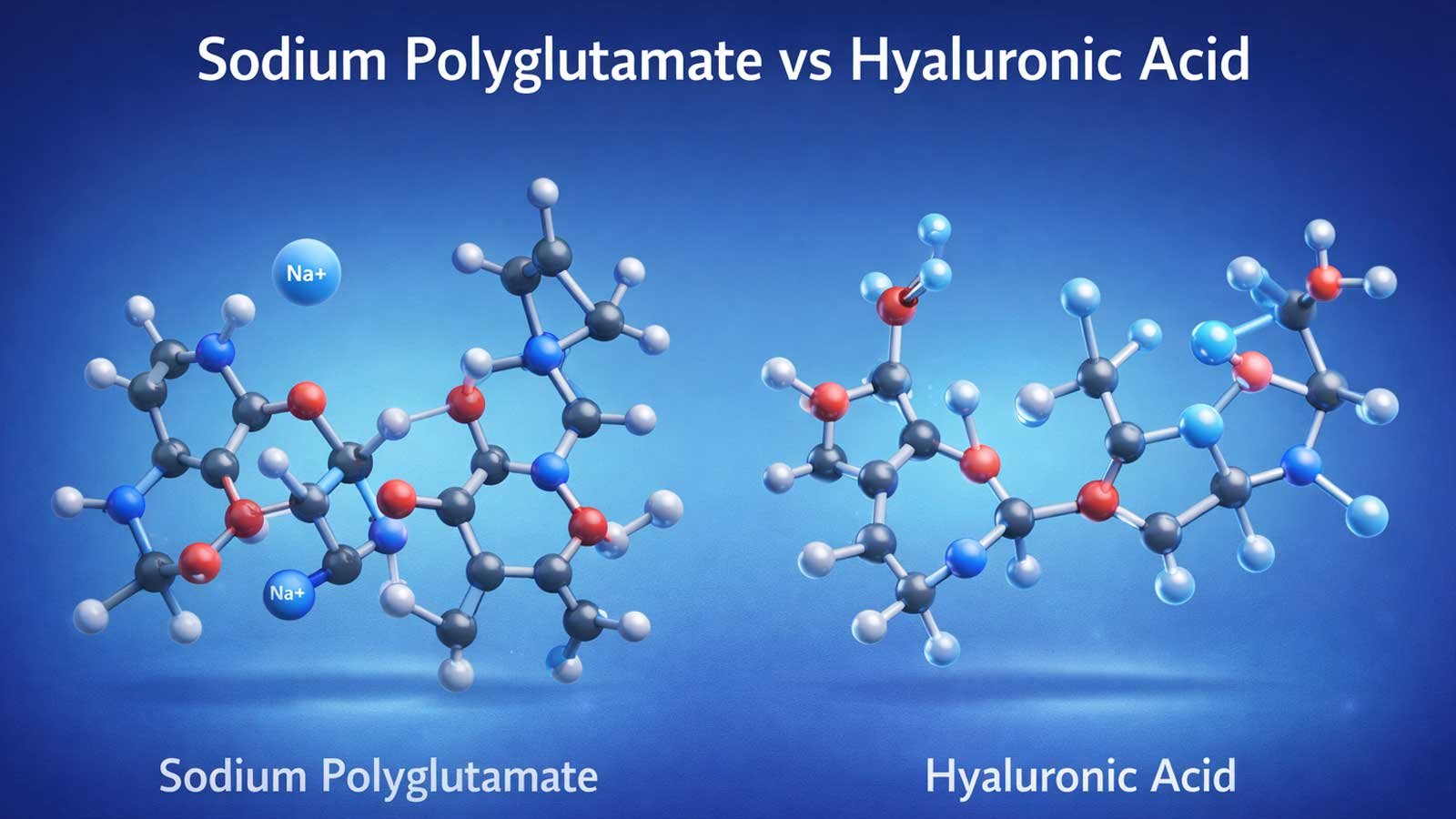
In practical formulation, sodium polyglutamate vs hyaluronic acid is one of the most frequently discussed comparisons.
While hyaluronic acid provides rapid hydration, sodium polyglutamate offers enhanced moisture retention due to its film-forming properties.
Similarly, compared with glycerin, sodium polyglutamate delivers a more advanced hydration mechanism and improved skin feel.
For this reason, many modern formulations combine multiple humectants to achieve balanced performance.
How to Choose a Reliable Sodium Polyglutamate Supplier
For cosmetic brands and manufacturers, selecting the right sodium polyglutamate supplier is crucial.
Key factors to consider include:
- product purity and consistency
- fermentation technology
- molecular weight control
- regulatory compliance
- supply stability
Working with a professional sodium polyglutamate manufacturer ensures that the ingredient meets cosmetic-grade standards and performs reliably in formulations.
For companies sourcing sodium polyglutamate wholesale or developing new skincare lines, supplier reliability directly impacts product quality and brand reputation.
Frequently Asked Questions About Sodium Polyglutamate
What is sodium polyglutamate used for in cosmetics?
It is mainly used as a moisturizing and skin-conditioning ingredient in serums, creams, and masks.
Is sodium polyglutamate better than hyaluronic acid?
Both ingredients are effective; sodium polyglutamate is known for long-lasting hydration, while hyaluronic acid provides rapid moisture.
What is the recommended dosage?
Typically between 0.1% and 1.0%, depending on formulation requirements.
Is sodium polyglutamate safe?
Yes, it is considered safe and widely used in cosmetic formulations.
Can it be combined with hyaluronic acid?
Yes, combining both ingredients enhances hydration performance.
Conclusion: Why Sodium Polyglutamate Is a Key Ingredient in Modern Cosmetics
As the skincare industry continues to evolve, sodium polyglutamate is emerging as a key ingredient in advanced cosmetic formulations.
Its ability to deliver long-lasting hydration, support the skin barrier, and integrate seamlessly into various product types makes it a valuable addition to modern skincare products.
For brands and manufacturers looking to enhance product performance and market competitiveness, incorporating sodium polyglutamate in cosmetics is a strategic choice.
Partnering with a reliable sodium polyglutamate supplier ensures consistent quality and supports successful product development in an increasingly competitive global market. Please contact us email: extract@chenlangbio.com if you need more information about sodium polyglutamate powder.
References
1, Shih, I. L., Van, Y. T., & Yeh, L. C. (2001). Production of poly(γ-glutamic acid) by microbial fermentation. Biotechnology Advances.
2, Cosmetics (MDPI). Polyglutamic Acid in Cosmetic Applications.
3, Papakonstantinou, E., Roth, M., & Karakiulakis, G. (2012). Hyaluronic acid: A key molecule in skin aging. Dermato-Endocrinology.
4, International Journal of Pharmaceutics. Hyaluronic acid in dermal and transdermal drug delivery.
5, Comparative studies on humectants and moisture retention performance in cosmetic formulations.