Introduction: Two Different Approaches to Managing Dandruff
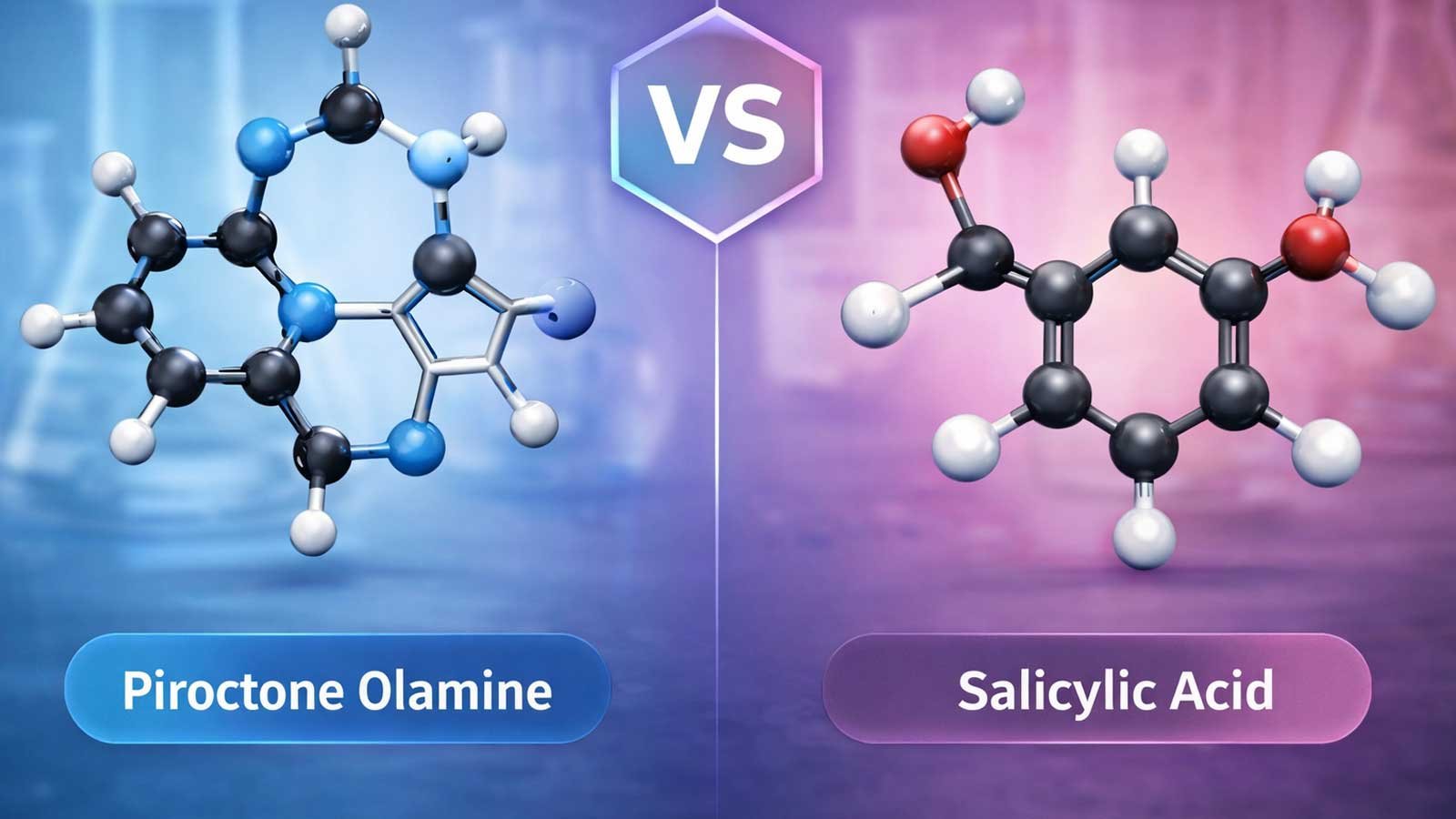
Dandruff remains one of the most common scalp concerns addressed by cosmetic hair care products. From a formulation standpoint, controlling dandruff requires a clear understanding of the biological mechanisms involved in scalp flaking and microbial imbalance. Two ingredients frequently discussed in dandruff-control formulations are piroctone olamine and salicylic acid. When formulators compare pirocotone olamine vs salicylic acid, they are essentially evaluating two different strategies for managing scalp conditions.
Modern scalp-care products often combine multiple functional ingredients to maintain scalp hygiene and reduce visible flakes. However, individual ingredients still play distinct roles in formulation design. In the case of pirocotone olamine vs salicylic acid, one ingredient focuses on controlling fungal microorganisms associated with dandruff, while the other targets the removal of excess scalp buildup through exfoliation.
For cosmetic brands, contract manufacturers, and ingredient buyers, understanding the differences between these ingredients helps guide formulation decisions. From the perspective of a raw material supplier, it is also important to explain how these ingredients function within shampoo systems and why certain formulations favor one approach over the other.
This article provides a technical comparison of pirocotone olamine vs salicylic acid, focusing on their mechanisms of action, formulation considerations, and practical applications in anti-dandruff shampoo development.
What Causes Dandruff on the Scalp?
Before comparing pirocotone olamine vs salicylic acid, it is useful to understand the underlying factors that contribute to dandruff formation.
Dandruff is generally associated with an imbalance in the scalp ecosystem. Several elements contribute to this condition, including scalp microbiota, sebum production, and the natural turnover of skin cells.
One of the most significant biological factors is the presence of Malassezia yeast, a group of lipophilic microorganisms naturally found on the human scalp. These microorganisms thrive in environments rich in sebum. When their population increases beyond normal levels, metabolic by-products can disrupt the scalp barrier and accelerate skin cell turnover.
This process leads to visible scalp flakes and irritation, which are commonly recognized as dandruff.
Several contributing factors may influence dandruff development:
| Contributing Factor | Role in Dandruff Formation |
| Sebum production | Provides nutrients for scalp microorganisms |
| Malassezia yeast | Associated with microbial imbalance |
| Accelerated skin turnover | Leads to visible flakes |
| Environmental stress | May affect scalp barrier function |
Because dandruff involves both microbial activity and abnormal skin shedding, different cosmetic ingredients target different aspects of the problem. This is precisely why the comparison of pirocotone olamine vs salicylic acid is relevant in shampoo formulation.
What Is Piroctone Olamine?
Piroctone Olamine is a cosmetic antifungal ingredient widely used in anti-dandruff shampoos and scalp-care products. Chemically, it is the ethanolamine salt of piroctone and belongs to the hydroxamic acid derivative family.
The ingredient has gained widespread use in cosmetic formulations because it helps control microorganisms associated with dandruff formation. In particular, pirocotone olamine anti dandruff ingredient targets the growth of Malassezia species on the scalp.
By limiting the proliferation of these microorganisms, the ingredient helps maintain scalp balance and reduce visible flakes.
From a formulation standpoint, Piroctone Olamine offers several advantages that make it suitable for modern shampoo systems:
- compatibility with common surfactant systems
- stability within typical shampoo pH ranges
- suitability for rinse-off scalp care products
Because of these characteristics, pirocotone olamine shampoo ingredient is commonly used in:
- anti-dandruff shampoos
- scalp treatment products
- hair tonics
- scalp hygiene formulations
For product developers comparing pirocotone olamine vs salicylic acid, the key feature of Piroctone Olamine is its antifungal mechanism, which addresses the microbial component of dandruff.
What Is Salicylic Acid in Dandruff Shampoos?
Salicylic acid is another ingredient frequently used in scalp-care products. Unlike Piroctone Olamine, it does not primarily target microorganisms. Instead, it functions as a keratolytic agent that helps loosen and remove dead skin cells from the scalp surface.
In cosmetic hair care products, salicylic acid dandruff shampoo formulations are designed to reduce the buildup of scalp flakes by promoting exfoliation.
Salicylic Acid works by weakening the bonds between dead skin cells. This allows accumulated flakes to be washed away more easily during shampooing.
Because dandruff often involves visible scalp scaling, exfoliating ingredients such as Salicylic Acid can improve the appearance of the scalp by removing excess buildup.
Typical cosmetic uses of Salicylic Acid in hair care include:
- exfoliating scalp treatments;
- dandruff-control shampoos;
- clarifying hair care products.
When comparing pirocotone olamine vs salicylic acid, salicylic acid represents an exfoliation-based strategy rather than a microbial control approach.
How Piroctone Olamine and Salicylic Acid Control Dandruff
Although both ingredients appear in dandruff-control products, their mechanisms of action differ significantly. Understanding these mechanisms helps formulators determine which ingredient is most suitable for a given formulation.
Antifungal Action of Piroctone Olamine
The primary function of Piroctone Olamine is to limit fungal growth associated with dandruff.
The ingredient interferes with metabolic processes in fungal cells, particularly those involved in energy production. By disrupting these processes, the growth of Malassezia yeast can be reduced.
This antifungal mechanism makes pirocotone olamine antifungal activity particularly valuable in shampoos designed to address the microbial component of dandruff.
Keratolytic Action of Salicylic Acid
Salicylic Acid works differently. Instead of targeting microorganisms, it helps remove accumulated dead skin cells from the scalp.
This keratolytic effect helps reduce visible flakes by loosening scalp buildup and improving the exfoliation process.
Two Different Dandruff Control Strategies
From a formulation perspective, the comparison of pirocotone olamine vs salicylic acid reflects two different strategies:
| Ingredient | Primary Function | Dandruff Strategy |
| Piroctone Olamine | Antifungal | Controls microorganisms |
| Salicylic Acid | Keratolytic | Removes scalp buildup |
Many modern formulations may incorporate both strategies, depending on the desired product positioning.
Formulation Differences in Anti-Dandruff Shampoo
When comparing pirocotone olamine vs salicylic acid, formulation compatibility is another important consideration for product developers.
Compatibility With Shampoo Systems
Piroctone olamine integrates well into many surfactant systems commonly used in cosmetic shampoos. It can be incorporated into formulations containing anionic, amphoteric, or nonionic surfactants.
This flexibility allows formulators to develop pirocotone olamine shampoo formulation systems that maintain desirable product characteristics such as:
- stable viscosity
- smooth texture
- consistent foaming performance
In contrast, salicylic acid requires careful formulation control because its exfoliating properties can influence scalp sensitivity depending on concentration and product design.
Delivery and Deposition
Another key factor is ingredient delivery during shampoo use.
The performance of Piroctone Olamine in shampoo formulations depends on how effectively the active ingredient reaches the scalp surface. Surfactant systems, polymers, and micellar structures can influence the deposition of the ingredient during rinsing.
This is why many formulators study pirocotone olamine scalp deposition when optimizing anti-dandruff shampoo formulations.
Comparison Table: Piroctone Olamine vs Salicylic Acid
The following table summarizes the primary differences between the two ingredients.
| Feature | Piroctone Olamine | Salicylic Acid |
| Mechanism | Antifungal | Keratolytic |
| Primary target | Malassezia yeast | Dead skin cells |
| Function | Controls microbial growth | Exfoliates scalp buildup |
| Product type | Anti-dandruff shampoos | Exfoliating scalp shampoos |
| Formulation role | Active ingredient | Supporting exfoliating agent |
This comparison helps illustrate why the discussion of pirocotone olamine vs salicylic acid is relevant in formulation strategy.
Why Cosmetic Brands Use Piroctone Olamine in Dandruff Control Products
In recent years, the hair care industry has shifted toward a more holistic approach to scalp health. Cosmetic brands increasingly focus on ingredients that maintain microbial balance while fitting within cosmetic regulatory frameworks.
Because of its antifungal properties and compatibility with cosmetic formulations, Piroctone Olamine has become a widely used ingredient in modern scalp-care products.
Key reasons brands choose this ingredient include:
- compatibility with cosmetic shampoo systems;
- suitability for routine scalp-care products;
- support for microbial balance on the scalp.
For brands comparing pirocotone olamine vs salicylic acid, the decision often depends on whether the formulation targets microbial imbalance or scalp buildup.
Choosing a Reliable Piroctone Olamine Manufacturer and Supplier
For cosmetic manufacturers, sourcing high-quality raw materials is essential for consistent product performance.
When selecting a pirocotone olamine manufacturer and supplier, several factors should be considered:
Ingredient Quality
High-purity cosmetic grade piroctone olamine ensures reliable performance in shampoo formulations. Suppliers typically provide documentation such as:
- certificate of analysis (COA);
- product specifications;
- safety documentation;
- Supply Stability.
Working with CHEN LANG BIO TECH, a reliable pirocotone olamine bulk supplier helps ensure consistent production capacity and stable supply for large-scale cosmetic manufacturing.
Technical Support
Experienced suppliers often assist formulators by providing guidance on ingredient compatibility and formulation design.
Conclusion
The comparison of pirocotone olamine vs salicylic acid highlights two different approaches to managing dandruff in cosmetic hair care products.
While salicylic acid helps remove scalp buildup through exfoliation, piroctone olamine focuses on controlling fungal microorganisms associated with dandruff formation.
For formulators and cosmetic brands, the choice between these ingredients depends on product positioning, formulation strategy, and desired scalp-care benefits.
From the perspective of ingredient sourcing, working with a trusted piroctone olamine manufacturer and supplier ensures that high-quality cosmetic ingredients are available for the development of effective anti-dandruff shampoo formulations.
If you are looking for a reliable Piroctone Olamine manufacturer and supplier, feel free to contact our team.
CHEN LANG BIO TECH
Email: extract@chenlangbio.com
Website: www.chenlangbio.com