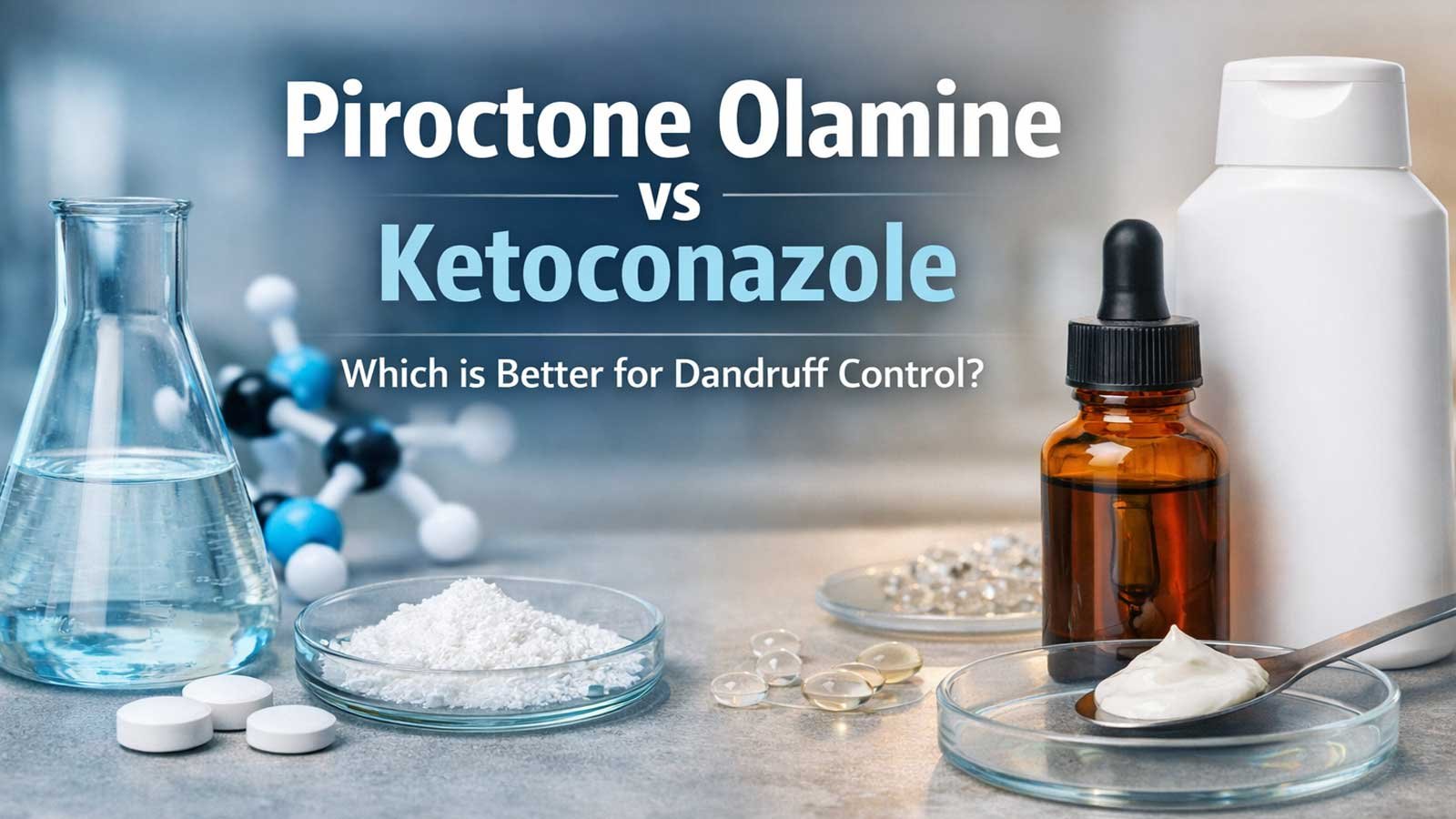

Introduction: Why Cosmetic Brands Are Evaluating the Safety of Piroctone Olamine
Piroctone olamine safety has become a topic of interest because the ingredient is widely used in anti-dandruff shampoos and scalp treatment formulations. These products are designed to maintain scalp balance while controlling microorganisms associated with dandruff formation. As demand grows for effective yet cosmetically elegant scalp-care solutions, many manufacturers are evaluating ingredients that combine performance, regulatory compliance, and formulation compatibility.
As ingredient transparency becomes increasingly important in the personal care industry, cosmetic brands and formulators are paying closer attention to ingredient safety profiles. One question frequently raised by product developers and procurement teams is is piroctone olamine safe in cosmetics and whether it meets the regulatory and formulation requirements for modern scalp-care products.
In the global cosmetic industry, pirocotone olamine cosmetic safety is generally assessed through toxicological evaluations, dermatological testing, and regulatory frameworks that determine how an ingredient can be used in cosmetic formulations. These evaluations help ensure that ingredients incorporated into shampoos, conditioners, and scalp treatments meet established safety standards.
For procurement professionals and product developers, understanding the safety and regulatory context of an ingredient is just as important as understanding its performance. In the case of Piroctone Olamine, both aspects play an important role in determining whether it is suitable for modern cosmetic formulations.
What Is Piroctone Olamine and Why Is It Used in Cosmetics?
To understand pirocotone olamine safety in cosmetics, it is helpful to first examine what the ingredient is and why it is commonly used in hair care formulations.
Piroctone olamine is a cosmetic antifungal ingredient primarily used in anti-dandruff shampoos and scalp-care products. Chemically, it is the ethanolamine salt of piroctone, a compound belonging to the hydroxamic acid derivative family. This structure allows the molecule to interact with fungal metabolic processes, particularly those associated with Malassezia yeast on the scalp.
Because Malassezia microorganisms are strongly linked to dandruff formation, ingredients that can limit their growth are commonly incorporated into scalp-care formulations. As a result, pirocotone olamine anti dandruff ingredient is frequently included in shampoos designed to reduce visible scalp flakes and support scalp hygiene.
In addition to anti-dandruff shampoos, piroctone olamine may also be found in several other personal care formulations:
- scalp treatment products;
- hair tonics;
- conditioning scalp treatments;
- dandruff-control cosmetic formulations.
These applications have contributed to its reputation as a versatile ingredient in the hair care industry.
From a formulation perspective, pirocotone olamine shampoo ingredient offers several practical advantages. It can be incorporated into many surfactant systems commonly used in cosmetic shampoos, and it remains stable within the typical pH range of shampoo formulations.
These properties make the ingredient particularly attractive for product developers seeking active ingredients that integrate smoothly into modern hair care systems.
How Piroctone Olamine Works in Anti-Dandruff Shampoo Formulations
To evaluate pirocotone olamine cosmetic safety, it is also important to understand how the ingredient functions in scalp-care products.
Dandruff is widely associated with an imbalance in the scalp microbiome, particularly the proliferation of Malassezia yeast. These microorganisms metabolize lipids present in sebum and produce metabolic by-products that may disrupt the scalp barrier. When this occurs, the scalp may respond with accelerated skin cell turnover, which results in visible flakes.
Ingredients used in anti-dandruff shampoos therefore often focus on controlling the growth of microorganisms linked to this process.
Piroctone olamine antifungal activity is primarily associated with its ability to interfere with fungal metabolic pathways. The ingredient interacts with iron-dependent enzymes that are necessary for mitochondrial energy production within fungal cells. When these metabolic processes are disrupted, fungal growth can be inhibited.
Because of this mechanism, Piroctone Olamine helps reduce the proliferation of microorganisms associated with dandruff formation. In cosmetic formulations, this function supports scalp hygiene and helps maintain a balanced scalp environment.
In addition to the ingredient’s biological mechanism, formulation design plays an important role in its effectiveness. Research has shown that the performance of pirocotone olamine anti dandruff shampoo formulations is influenced by factors such as:
- surfactant system design
- micellar solubilization of the active ingredient
- deposition efficiency on the scalp
These factors determine how efficiently the ingredient is delivered to the scalp during washing. As a result, formulators often optimize shampoo systems to improve pirocotone olamine scalp deposition, which can enhance the overall performance of the product.
For cosmetic manufacturers, this highlights the importance of selecting both the right active ingredient and the right formulation system when developing anti-dandruff hair care products.
Scientific Studies on Piroctone Olamine Safety
The safety of cosmetic ingredients is typically evaluated through a combination of toxicological assessments, dermatological testing, and regulatory review. In the case of pirocotone olamine safety, several scientific studies and safety evaluations have examined how the ingredient behaves when used in personal care products.
Toxicological assessments of Piroctone Olamine generally focus on factors such as:
- skin irritation potential
- sensitization risk
- systemic exposure through cosmetic use
- safe concentration ranges in rinse-off products
These evaluations are conducted to ensure that cosmetic ingredients can be safely used within defined concentration limits.
Dermatological testing has also been used to assess how formulations containing pirocotone olamine cosmetic ingredient interact with the skin and scalp. In rinse-off products such as shampoos, exposure time is relatively short, which is one reason why these products are typically evaluated differently from leave-on cosmetic products.
Scientific research examining pirocotone olamine safety study data has generally concluded that the ingredient can be used safely in cosmetic formulations when applied according to established guidelines and concentration limits.
For cosmetic manufacturers, these safety assessments provide a scientific basis for incorporating the ingredient into scalp-care products designed for routine use.
Regulatory Status of Piroctone Olamine in Global Cosmetic Markets
For cosmetic brands and product developers, regulatory acceptance is one of the most important considerations when selecting functional ingredients. Understanding pirocotone olamine regulation in different markets helps ensure that formulations comply with international cosmetic standards.
In many regions, piroctone olamine is recognized as a cosmetic ingredient used in anti-dandruff shampoos and scalp-care products. Regulatory authorities evaluate such ingredients based on toxicological data, intended product use, and exposure levels in cosmetic formulations.
European Union
In the European Union, cosmetic ingredients are regulated under the EU Cosmetic Regulation (EC) No. 1223/2009. Within this framework, pirocotone olamine cosmetic regulation allows the ingredient to be used in rinse-off hair care products such as anti-dandruff shampoos.
Because shampoos are rinse-off formulations, the exposure time on the scalp is relatively limited. This factor is taken into account during safety assessments when determining acceptable use conditions for cosmetic ingredients.
For product developers targeting the European market, regulatory compliance also requires proper ingredient documentation, safety data sheets, and cosmetic product safety reports.
United States
In the United States, cosmetic products are regulated by the Food and Drug Administration (FDA) under the Federal Food, Drug, and Cosmetic Act. Ingredients such as Piroctone Olamine may be used in cosmetic formulations provided that they are safe under intended conditions of use.
Because anti-dandruff shampoos can sometimes fall into both cosmetic and therapeutic categories depending on their active ingredients, manufacturers carefully evaluate whether a formulation should be positioned as a cosmetic product or an over-the-counter drug product.
In the case of pirocotone olamine cosmetic ingredient, it is commonly incorporated into cosmetic shampoos that support scalp hygiene and dandruff control without being classified as pharmaceutical drug products.
Asia-Pacific Cosmetic Markets
In Asia-Pacific regions, cosmetic ingredient regulations vary slightly by country but generally follow similar safety evaluation principles. Cosmetic manufacturers developing products for markets such as Japan, South Korea, and China typically verify ingredient compliance through national cosmetic ingredient databases and regulatory frameworks.
Because piroctone olamine has been widely used in anti-dandruff shampoos for many years, it is familiar to many regulatory systems across global cosmetic markets.
For international brands, this global acceptance makes the ingredient particularly attractive when designing products intended for multiple regions.
Safe Concentration of Piroctone Olamine in Cosmetic Products
Beyond regulatory approval, formulators also need to understand the pirocotone olamine concentration cosmetics typically used in hair care formulations.
In cosmetic science, the concentration of active ingredients is carefully determined to balance product performance with safety considerations. For anti-dandruff shampoo systems, the effective concentration of Piroctone Olamine is generally determined during formulation development and safety evaluation.
Most commonly, pirocotone olamine dosage shampoo levels fall within ranges that allow the ingredient to effectively interact with scalp microorganisms while maintaining compatibility with the overall shampoo system.
Several factors influence the final concentration used in a formulation:
| Formulation Factor | Impact on Concentration |
| Surfactant system | Influences ingredient solubility and delivery |
| Product format | Rinse-off vs leave-on formulations |
| Desired efficacy | Target level of dandruff control |
| Regulatory guidelines | Maximum allowed use levels |
In rinse-off shampoo products, the ingredient interacts with the scalp during washing and rinsing. Because of this relatively short contact time, formulators often design shampoo systems that enhance the deposition of the active ingredient on the scalp.
Research examining pirocotone olamine scalp deposition has shown that formulation factors such as micelle structure and polymer-assisted deposition systems can influence how effectively the ingredient reaches the scalp surface.
For cosmetic chemists, this highlights that ingredient performance is not determined solely by concentration. Instead, the entire formulation architecture plays a critical role in the delivery of the active ingredient.
Why Cosmetic Brands Choose Piroctone Olamine for Scalp Care Products
As the global hair care market continues to evolve, cosmetic brands are placing greater emphasis on scalp health and microbiome balance. This shift has led to growing interest in ingredients that support effective dandruff control while remaining compatible with modern cosmetic formulations.
Several factors explain why pirocotone olamine anti dandruff shampoo formulations have become increasingly common.
Compatibility With Modern Shampoo Systems
Many contemporary shampoos are designed with mild surfactant systems intended to provide effective cleansing while maintaining scalp comfort.
Because piroctone olamine integrates well with common surfactant combinations, it can be incorporated into many shampoo systems without significantly altering the formulation architecture.
This compatibility allows formulators to develop anti-dandruff shampoos that maintain desirable sensory characteristics such as:
- smooth texture
- stable viscosity
- pleasant foaming properties
For cosmetic brands, this flexibility simplifies product development.
Alignment With Scalp-Care Trends
In recent years, the concept of scalp care has become an important focus in the hair care industry. Consumers increasingly recognize that maintaining scalp balance is essential for overall hair appearance and comfort.
Ingredients such as pirocotone olamine scalp care ingredient fit well into this trend because they support scalp hygiene while remaining compatible with cosmetic hair care formulations.
As a result, the ingredient is frequently incorporated into:
- anti-dandruff shampoos
- scalp treatment products
- conditioning scalp tonics
These applications reflect the broader movement toward multifunctional scalp-care products.
Consistency and Manufacturing Practicality
From a manufacturing perspective, Piroctone Olamine offers advantages related to formulation stability and ingredient handling.
Because it can be incorporated into cosmetic shampoo bases without requiring highly specialized pharmaceutical suspension systems, production processes can remain consistent with typical cosmetic manufacturing practices.
For contract manufacturers and product developers, this operational compatibility is an important consideration.
Choosing a Reliable Piroctone Olamine Manufacturer and Supplier
For brands developing scalp-care formulations, sourcing high-quality raw materials is essential. The performance of an anti-dandruff shampoo depends not only on formulation design but also on the quality and consistency of the active ingredient.
When evaluating a Piroctone Olamine manufacturer and supplier, several factors should be considered.
Ingredient Purity and Quality Assurance
High-purity cosmetic grade piroctone olamine helps ensure stable performance in shampoo formulations. Reliable suppliers typically provide comprehensive documentation to support product quality.
These documents may include:
- certificate of analysis (COA)
- product specification sheets
- safety documentation
- regulatory compliance data
Such documentation allows manufacturers to verify ingredient quality before incorporating it into commercial formulations.
Supply Stability and Production Capacity
For large-scale cosmetic production, consistent supply is critical. Working with an experienced pirocotone olamine bulk supplier helps ensure that production schedules can be maintained without supply interruptions.
Stable production capacity is particularly important for brands producing anti-dandruff shampoos at high volumes.
Technical Support for Formulation Development
Ingredient suppliers can also play a valuable role in supporting formulation development. Many cosmetic manufacturers collaborate with suppliers to obtain technical guidance regarding ingredient integration and formulation optimization.
Experienced suppliers may provide information related to:
- formulation compatibility
- recommended use ranges
- stability considerations in shampoo systems
This technical collaboration helps cosmetic brands optimize the performance of Piroctone Olamine in anti-dandruff formulations.
Frequently Asked Questions About Piroctone Olamine
1. Is piroctone olamine safe in cosmetics?
Yes. piroctone olamine is widely used in cosmetic anti-dandruff shampoos and scalp-care products. Safety assessments and regulatory frameworks indicate that the ingredient can be safely used in cosmetic formulations when formulated within established concentration limits.
2. What is piroctone olamine used for in cosmetics?
Piroctone Olamine is commonly used in anti-dandruff shampoos and scalp treatment products. It helps control microorganisms associated with dandruff and supports scalp hygiene in cosmetic hair care formulations.
3. How does piroctone olamine work against dandruff?
The pirocotone olamine antifungal activity works by interfering with metabolic processes in fungal cells such as Malassezia yeast, which are associated with dandruff formation on the scalp.
4. Is piroctone olamine regulated in cosmetic products?
Yes. it is regulated under cosmetic regulatory frameworks in many regions. It is commonly permitted in rinse-off hair care products such as anti-dandruff shampoos when used within established safety limits.
5. What concentration of piroctone olamine is used in shampoos?
The pirocotone olamine concentration in cosmetics typically falls within ranges defined during cosmetic safety evaluations and formulation design. The exact level depends on the product formulation and regulatory guidelines.
6. Why do cosmetic brands choose piroctone olamine?
Many cosmetic brands use piroctone olamine in anti-dandruff shampoo formulations because it integrates well into modern shampoo systems and supports scalp-care product concepts.
Conclusion: Is Piroctone Olamine Safe in Cosmetics?
Based on available scientific evaluations and regulatory frameworks, pirocotone olamine safety cosmetic assessments indicate that the ingredient can be safely used in cosmetic formulations when applied within established concentration limits.
The ingredient has become widely recognized in the personal care industry as an effective antifungal active used in anti-dandruff shampoos and scalp-care products.
Compared with pharmaceutical antifungal ingredients used in medicated shampoos, piroctone olamine fits well within cosmetic formulation systems and regulatory frameworks. Its compatibility with modern shampoo bases and alignment with scalp-care product trends have contributed to its widespread use in the global hair care market.
For cosmetic brands, formulators, and procurement professionals, understanding the safety profile and regulatory status of ingredients such as piroctone olamine is an important part of developing reliable scalp-care products.
Working with a trusted piroctone olamine manufacturer and supplier ensures that high-quality cosmetic-grade ingredients are available for product development and large-scale production. P,lease contact our email: extract@chenlangbio.com if you need more information.