
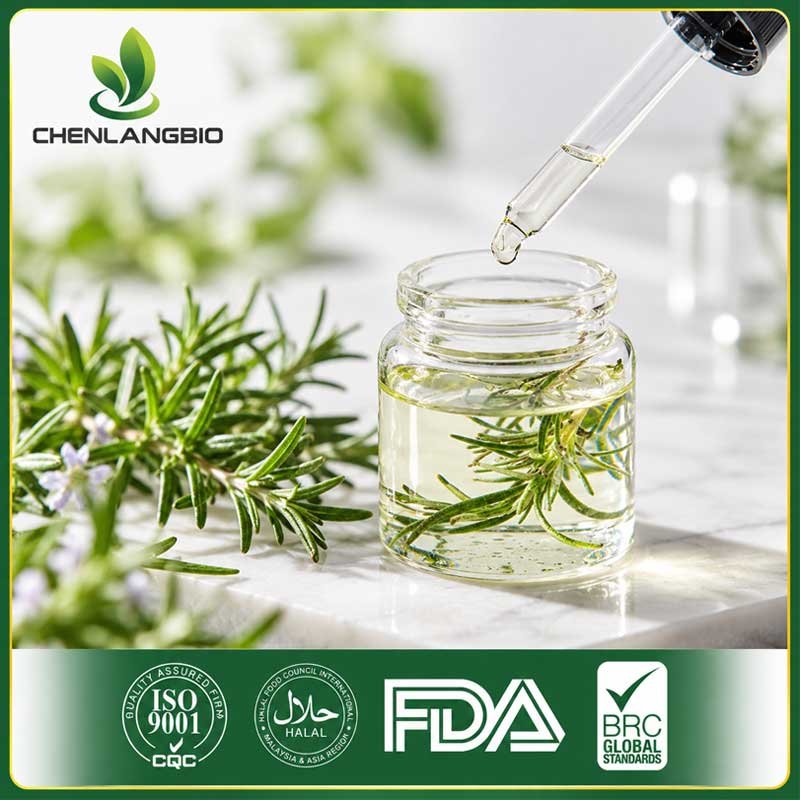
Rosemary Essential Oil Supplier – Natural Steam-Distilled Rosemary Oil
Rosemary essential oil supplier CHEN LANG BIO TECH manufactures natural rosemary oil from the aromatic aerial parts of Rosmarinus officinalis using a controlled water distillation process. Our essential oil is a clear, pale yellow liquid with a distinctive fresh, herbaceous aroma, developed for cosmetic formulations, hair care products, personal care manufacturing, and fragrance applications.
With access to more than 1,000 mu (approximately 67 hectares) of rosemary cultivation, we maintain traceable botanical sourcing and a reliable raw material supply. Our production operations combine plant material selection, controlled distillation, and quality evaluation to support manufacturers requiring consistent aromatic ingredients for commercial formulations.
We supply rosemary essential oil in protective aluminum bottles and provide technical information to help customers evaluate the material before placing commercial orders.
What Is Rosemary Essential Oil?
Rosemary essential oil is a volatile aromatic oil obtained from rosemary, an evergreen herb belonging to the Lamiaceae family. The plant is traditionally identified as Rosmarinus officinalis L., while Salvia rosmarinus Spenn. is its currently accepted botanical name.
The oil contains naturally occurring volatile compounds responsible for rosemary’s characteristic fresh, herbal, camphoraceous aroma. Unlike nonvolatile rosemary extracts standardized for compounds such as carnosic acid or rosmarinic acid, rosemary essential oil is primarily valued for its aromatic composition.
Our natural rosemary essential oil is produced by water distillation of rosemary herb, yielding a clear, pale yellow liquid suitable for evaluation in fragrance, cosmetic, and personal care formulations.
Rosemary Essential Oil Specifications
| Product Information | Specification |
| Product Name | Rosemary Essential Oil |
| Botanical Name | Rosmarinus officinalis L. |
| Accepted Botanical Name | Salvia rosmarinus Spenn. |
| Plant Family | Lamiaceae |
| Plant Part Used | Aerial Parts of Rosemary Herb |
| Extraction Method | Water Distillation |
| Appearance | Clear, Pale Yellow Oily Liquid |
| Odor | Characteristic Fresh Rosemary Aroma |
| GMO Status | Non-GMO |
| Packaging | Aluminum Bottles |
| Country of Origin | China |
| Manufacturer | CHEN LANG BIO TECH |
Detailed analytical specifications, including physical properties and volatile composition, can be confirmed through the current product documentation.
How Is Rosemary Essential Oil Produced?
The manufacturing process directly influences the aroma, composition, and consistency of rosemary essential oil. At CHEN LANG BIO TECH, we use water distillation to recover naturally occurring volatile compounds from selected rosemary plant material.
Water Distillation of Rosemary Herb
Our water-distilled rosemary essential oil is manufactured through a controlled process designed to recover aromatic constituents while maintaining consistent product quality.
Selected rosemary herb is introduced into the distillation system, where heating releases volatile aromatic compounds together with water vapor. The vapor passes through a condensation system and returns to liquid form. The essential oil is then separated from the aqueous distillate according to differences in physical properties.
Following separation, the collected oil undergoes quality evaluation before being transferred into suitable packaging.
The distillation process involves several important control points, including botanical raw material quality, processing temperature, distillation duration, and oil-water separation efficiency. These parameters influence both extraction performance and the composition of the finished oil.
Controlled Processing and Aroma Consistency
Rosemary essential oil is a complex mixture of volatile compounds rather than a single chemical substance. Its composition may vary according to plant genetics, growing conditions, harvest timing, and processing parameters.
Our manufacturing approach emphasizes raw material traceability and controlled production conditions to help reduce unnecessary variation between commercial batches.
For fragrance and cosmetic manufacturers, this consistency is particularly important because changes in essential oil composition may affect the aroma and sensory characteristics of finished formulations.
Rosemary Essential Oil Composition and Aroma Profile
The rosemary essential oil composition typically includes monoterpenes and oxygenated monoterpenes that contribute to its distinctive aromatic character.
Commonly identified constituents include:
| Component | General Characteristics |
| 1,8-Cineole | Fresh, eucalyptus-like aromatic note |
| Camphor | Strong camphoraceous character |
| α-Pinene | Pine-like, fresh herbal note |
| Borneol | Woody, camphoraceous aroma |
| Camphene | Herbal and resinous characteristics |
The relative proportions of these constituents depend on the rosemary chemotype, botanical origin, and extraction conditions. Therefore, the table identifies common constituents rather than guaranteed concentrations in our product.
Rosemary oils with different chemical profiles may exhibit noticeably different fragrance characteristics. For example, a cineole-rich oil can present a fresher, more penetrating aroma, while oils containing higher proportions of camphor may have a stronger camphoraceous character.
For manufacturers developing standardized formulations, rosemary essential oil GC-MS analysis can provide useful information about the volatile composition of a particular batch.
We recommend reviewing the available analytical profile alongside the intended application rather than selecting an essential oil based solely on its botanical name.
Rosemary Essential Oil vs. Rosemary Extract
Rosemary essential oil and rosemary extract originate from the same botanical source but represent different ingredient categories.
| Feature | Rosemary Essential Oil | Rosemary Extract |
| Production Method | Water or Steam Distillation | Solvent Extraction or Other Processes |
| Main Constituents | Volatile Aromatic Compounds | Depends on Extraction Method |
| Common Analytical Markers | 1,8-Cineole, Camphor, α-Pinene | Carnosic Acid, Rosmarinic Acid |
| Physical Form | Volatile Oily Liquid | Powder, Liquid or Oleoresin |
| Primary Applications | Fragrance and Personal Care | Antioxidant and Formulation Applications |
Rosemary essential oil is generally selected for its characteristic aroma and volatile composition. In contrast, rosemary extracts standardized for carnosic acid or rosmarinic acid are commonly evaluated for antioxidant-related formulation purposes.
Manufacturers should distinguish these ingredients when preparing purchasing specifications because they are not interchangeable on a weight-for-weight basis.
Rosemary Essential Oil Applications
Our rosemary oil is supplied for industrial formulations where a recognizable herbal fragrance and consistent botanical ingredient quality are required.
Rosemary Essential Oil for Hair Care
Rosemary essential oil for hair care is used as an aromatic ingredient in shampoos, conditioners, hair oils, and scalp care formulations.
Its fresh herbal fragrance is particularly suitable for botanical-inspired cleansing products and premium personal care ranges. Depending on the fragrance composition, rosemary oil may be combined with other aromatic materials to create refreshing herbal or woody scent profiles.
In shampoo and conditioner development, formulators should consider essential oil solubility, compatibility with surfactants, fragrance stability, and the intended concentration in the finished product.
For water-based formulations, suitable solubilization or emulsification systems may be necessary to maintain uniform distribution.
Rosemary essential oil should not be confused with ingredients specifically evaluated or approved for hair-growth treatment. Its use in cosmetic formulations requires appropriate safety assessment and compliance with applicable cosmetic regulations.
Rosemary Essential Oil for Cosmetics
Rosemary essential oil for cosmetics provides a characteristic botanical fragrance for creams, lotions, cleansing products, and other personal care formulations.
Its aromatic properties make it relevant to natural-inspired cosmetic products where herbal fragrance is part of the intended sensory profile.
When incorporating rosemary oil into emulsions or other cosmetic systems, manufacturers should evaluate formulation compatibility, fragrance retention, oxidation stability, and packaging conditions.
The appropriate concentration depends on the complete formulation, product category, and relevant fragrance safety requirements.
Rosemary Essential Oil for Aromatherapy and Fragrance
Rosemary essential oil is also used in aromatic blends, diffuser formulations, scented products, and personal fragrance compositions.
Its herbal and camphoraceous notes can complement citrus, woody, and other botanical fragrance materials.
For fragrance developers, selecting a suitable rosemary oil requires consideration of its chemical profile, aroma intensity, and compatibility with the desired fragrance composition.
Our product is available for evaluation by essential oil brands, fragrance developers, and manufacturers seeking natural aromatic raw materials.

Traceable Rosemary Cultivation and Raw Material Sourcing
Our Rosemary Cultivation Base
The quality of rosemary essential oil begins with the botanical raw material.
CHEN LANG BIO TECH has access to more than 1,000 mu of rosemary cultivation, equivalent to approximately 67 hectares. Our sourcing program emphasizes ecological cultivation practices, non-GMO botanical material, and traceability throughout the agricultural supply chain.
Maintaining visibility over raw material sourcing helps us manage important factors such as botanical identity, harvest conditions, and the availability of rosemary herb for production.
This agricultural foundation supports more reliable procurement planning and reduces dependence on irregular spot-market sourcing.
From Cultivation to Commercial Manufacturing
As a rosemary essential oil manufacturer, we integrate botanical raw material sourcing with distillation and product quality management.
The production process begins with selected rosemary herb and continues through distillation, oil separation, quality evaluation, and final packaging.
Traceable sourcing allows relevant raw material information to be linked with production records, supporting batch management and customer quality requirements.
For manufacturers purchasing natural ingredients on a recurring basis, this integrated approach provides greater transparency and helps maintain continuity of supply.

Rosemary Essential Oil Quality Control and Documentation
Consistent quality is essential when rosemary oil is used in commercial fragrance and personal care manufacturing.
Our quality evaluation focuses on botanical identity, product appearance, characteristic aroma, and applicable physical and chemical parameters.
Depending on the agreed specification, relevant analytical parameters may include relative density, refractive index, and volatile composition.
Customers may request a rosemary essential oil COA to review the available batch specifications before purchasing.
Additional technical documentation, including a Technical Data Sheet (TDS), Safety Data Sheet (SDS), and available analytical reports, can be discussed according to customer requirements.
For fragrance and cosmetic applications, buyers should also evaluate applicable ingredient identity, safety, and regulatory documentation before incorporating the material into finished products.
We encourage customers to confirm their target specifications during supplier qualification, particularly when specific aromatic constituents or batch consistency requirements are important.
Bulk Rosemary Essential Oil Supply and Packaging
CHEN LANG BIO TECH supplies bulk rosemary essential oil for cosmetic manufacturers, hair care brands, fragrance companies, and botanical ingredient distributors.
Our standard packaging uses aluminum essential oil bottles, which help protect the material from unnecessary light exposure during storage and transportation.
Containers should remain tightly sealed and be stored according to the conditions specified in the current technical documentation. Limiting exposure to excessive heat, air, and direct sunlight helps preserve the oil’s aromatic characteristics.
Samples and Commercial Orders
Customers can request samples for fragrance evaluation, formulation development, and laboratory testing before proceeding with larger purchases.
The rosemary essential oil MOQ, available packaging quantities, and delivery arrangements can be confirmed according to the customer’s purchasing requirements.
For ongoing manufacturing projects, we can discuss supply schedules and commercial order planning to support regular production demand.
What Determines Rosemary Essential Oil Price?
The rosemary essential oil price per kg depends on raw material quality, distillation costs, product specifications, order quantity, and packaging requirements.
Essential oils with specific chemical composition requirements may also involve additional raw material selection or analytical testing.
For commercial purchasing, comparing suppliers should involve more than the quoted unit price. Botanical identity, extraction method, batch documentation, and consistency of supply are equally important when evaluating long-term sourcing options.
We provide quotations based on the requested quantity, product requirements, and delivery destination.
Frequently Asked Questions About Rosemary Essential Oil
Is Your Rosemary Essential Oil Natural?
Yes. Our rosemary essential oil is produced from rosemary herb using water distillation. The product contains naturally occurring aromatic compounds recovered from the botanical material without being marketed as a synthetic rosemary fragrance blend.
What Is the Difference Between Rosemary Essential Oil and Rosemary Extract?
Rosemary essential oil contains volatile aromatic constituents obtained through distillation. Rosemary extract is produced using other extraction processes and may be standardized for nonvolatile compounds such as carnosic acid or rosmarinic acid.
Can Rosemary Essential Oil Be Used in Shampoo and Cosmetics?
Yes. Rosemary essential oil can be evaluated as a fragrance ingredient in shampoos, conditioners, creams, lotions, and other personal care products. Manufacturers should determine suitable concentrations through formulation testing and applicable safety assessments.
Do You Supply Rosemary Essential Oil in Bulk?
Yes. We provide rosemary essential oil for commercial manufacturing and ingredient distribution. Order quantities, packaging specifications, and delivery arrangements can be discussed according to customer requirements.
Can I Request a Rosemary Essential Oil Sample and COA?
Yes. Customers can contact our sales team to request available product samples and quality documentation. Please provide your intended application, estimated purchasing quantity, and destination country so we can assist with the appropriate supply arrangements.
Request a Quote for Rosemary Essential Oil
CHEN LANG BIO TECH manufactures and supplies natural rosemary essential oil for cosmetic, hair care, fragrance, and personal care manufacturers worldwide.
With traceable rosemary cultivation, controlled water distillation, and commercial raw material supply capabilities, we support customers seeking consistent botanical ingredients for formulation development and ongoing production.
Contact our team to request product specifications, available samples, or a commercial quotation.
Email: extract@chenlangbio.com
Product: Rosemary Essential Oil
Manufacturer: XI AN CHEN LANG BIO TECH CO., LTD.
Please share your intended application, required quantity, and destination country. Our sales team will assist with product information, pricing, and supply arrangements.